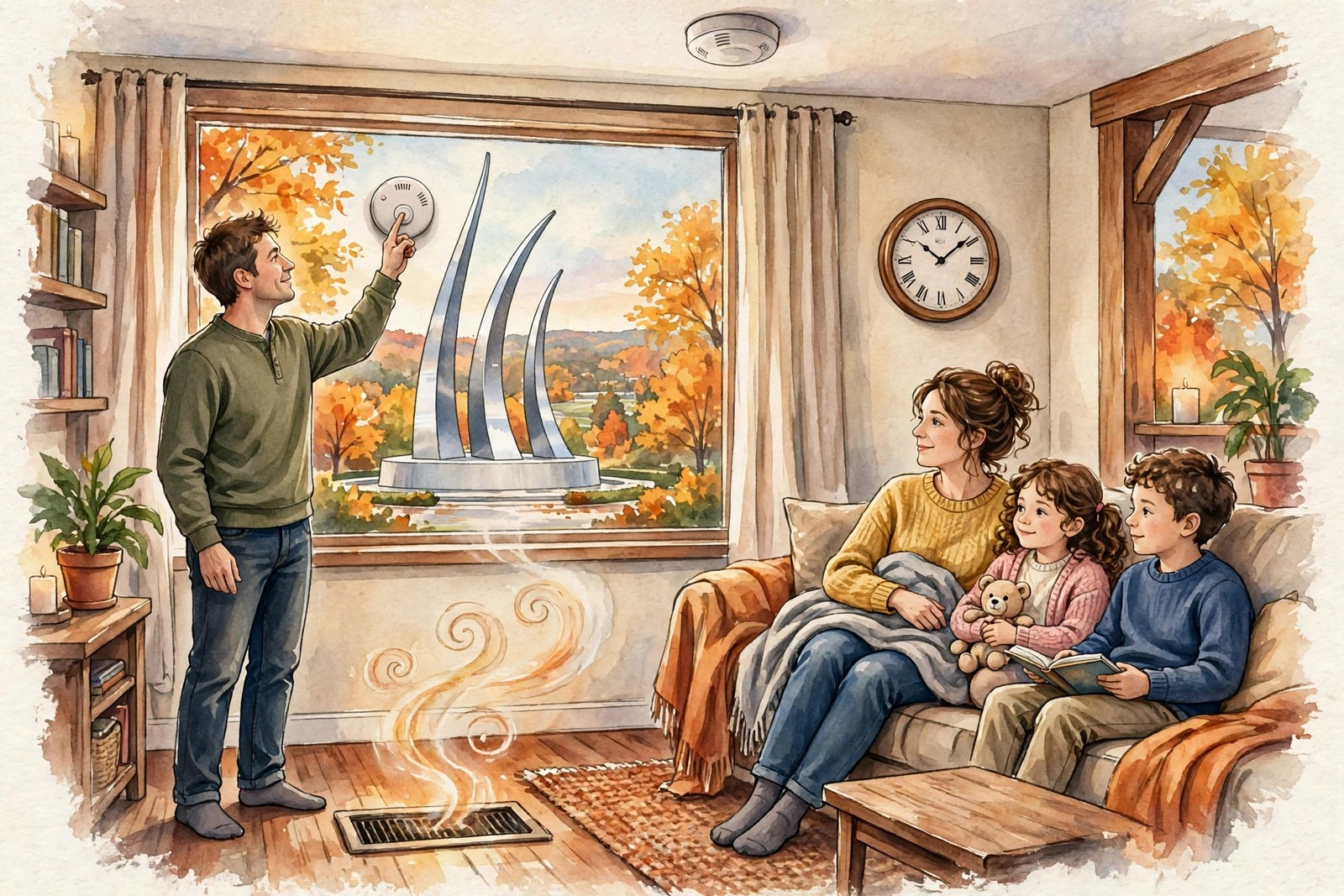
Arlington has a mild weekend ahead, with highs near 64°F on Saturday and Sunday and cool nights in the mid-40s. Early Sunday, November 1, clocks go back one hour as daylight saving time ends — a good reminder for one safety job: test your smoke and carbon monoxide alarms.
Why Working Alarms Matter
Carbon monoxide is a gas you cannot see or smell. It can come from fuel-burning equipment that is not working or venting as it should. A working carbon monoxide alarm can warn you early, and smoke alarms do the same for fire. A short test this weekend is time well spent.
Steps to Test Your Smoke and Carbon Monoxide Alarms
Here are steps you can take this week:
- Press the test button on each alarm, following the maker’s instructions. The button checks the alarm’s sound and power — it does not test the sensor itself. If an alarm does not sound, or sounds weak, follow the maker’s steps for batteries or replacement.
- Fit fresh batteries if your model uses replaceable ones — including the backup batteries in hardwired alarms — unless the maker says otherwise. If your alarm has a sealed battery, or a warning that will not clear, follow the maker’s instructions — many models must be replaced as a unit.
- Check the date on each alarm, printed on the back or side. If only a manufacture date is shown, use the maker’s stated service life to work out when replacement is due. Replace any alarm past its date, or that does not respond correctly to its test.
- Make sure alarms are in place. Smoke alarms belong inside each bedroom, outside each sleeping area, and on each level, including the basement. Carbon monoxide alarms belong outside each sleeping area and on each level. Follow the maker’s placement instructions and local requirements.
- Clean each alarm gently. Use a soft dry cloth or a vacuum with a soft brush on the outside only — do not open the alarm or spray cleaner on it. Test monthly too; a steady chirp is usually a battery or end-of-life warning, not a full alarm, so follow the maker’s instructions for that sound.
What to Do If an Alarm Sounds
Know what to do if an alarm sounds for real. If the carbon monoxide alarm sounds, do not try to find the source — get everyone outside into fresh air and call 911 from outside, and do not go back in until responders say it is safe. If a smoke alarm sounds, leave at once and call 911 from outside — do not wait to see smoke or fire first.
When to Have Your Heating System Checked
911Air-Care serves Arlington and Northern Virginia, Monday to Saturday from 7 AM to 5 PM, Sunday closed, with 24/7 emergency help. If your heating system makes new noises, turns on and off again and again, or will not hold the set temperature, contact us to arrange a heating check.